Audix Fireball-V Reviews: See Why 0 Shoppers Rated It 0 Stars!
Some say the Audix Fireball-V rocks, others think it needs more tuning. See what 0 artists think about these Audix microphones — before you hit checkout.
 Supermod
  Moderator
 Recaptor
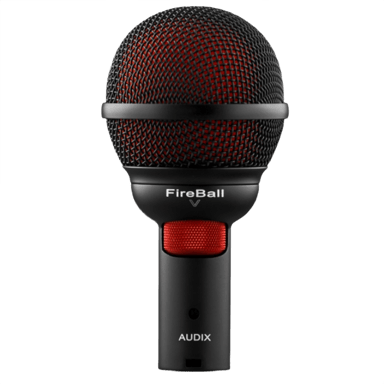
 Audix Fireball-V: A Dynamic Microphone Built for Professional Precision
The Audix Fireball-V stands out in the professional microphone category as a meticulously engineered dynamic microphone designed specifically for both live and studio applications. Introduced in 2006 and crafted in the United States, this model targets professional users seeking high-quality instrument and voice recording capabilities.
At first glance, its emphasis on reliable XLR connectivity, a cardioid polar pattern, and robust build suggests it's tailored to isolate sound sources effectively while minimizing unwanted noise. But does it really live up to the expectations set by its specs and reputation? Let's dive deeper to understand what makes the Fireball-V tick and where it fits in today's landscape of professional audio equipment.
Detailed Specs & Features
On paper, the Fireball-V combines classic design elements with thoughtful engineering choices tailored for precision. It offers a classic cardioid polar pattern, which focuses on capturing sound directly in front of the microphone while reducing pickup from the sides and rear; ideal for isolating vocals or instruments during live or studio recording sessions.
According to its audio performance data, it covers a sound spectrum ranging from 50 Hz to 16,000 Hz, which balances the capture of low-end warmth and high-frequency detail, ensuring a natural timbre. The sensitivity is rated at -53 dBV/Pa, which translates to a suitable level of responsiveness for live instrument and vocal capture without excessive noise. Its maximum sound pressure level tolerance of 140 dB confirms it's well-suited for high-volume sources like amplified guitars or drums.
The microphone relies solely on a passive power source, meaning it does not require phantom power, which often proves advantageous for stage rigging simplicity. The XLR connection interface provides durability and professional-standard balanced audio output, crucial for minimizing interference. The zinc body material, combined with a black finish coating, endows it with resilience, reinforced further by an internal shockmount and neodymium magnet that boosts sensitivity and sound clarity.
The handheld form factor, complemented by a supplied mounting clip and a detachable mount system, makes it a practical choice for varied performance settings. Although it doesn't feature onboard controls or software integration, it offers essential gain control and an on/off switch, supporting straightforward operation without unnecessary complications.
User Experience & Performance (Based on Specs)
Design & Build
What stands out most about the Fireball-V is its sturdy build designed for professional settings. The zinc body lends a solid, reliable feel, while the steel grill adds protection without sacrificing acoustic transparency. This combination is fortified by an internal shockmount, which acts to reduce handling noise and mechanical vibrations; a welcome feature for live performers moving on stage.
The mounted clip and detachable mount system enhance its versatility, though the absence of splash or dust resistance may limit outdoor or rough handling scenarios. Still, its black finish coating keeps it visually unobtrusive on stages and studio environments alike. From the specs, the microphone weighs only 0.28 pounds, making it comfortable to hold for extended periods without fatigue. Its 5/8" mounting thread size aligns with industry-standard mic stands, facilitating easy setup.
Performance
Performance expectations rest heavily on its cardioid directionality and frequency response range. Designed to reject off-axis noise by 23 dB, it excels at isolating the desired sound source, which is crucial on dynamic and noisy stages. The Fireball-V's voice isolation feature furthers this attribute by dampening ambient noise, improving clarity for vocals and instruments alike.
With a comfortable medium transient response, it balances sharpness and smoothness in sound pickup to capture detailed yet natural tones. The lack of built-in filters or pads implies that external equipment or sound engineering will be required to manage volume peaks or excessive background noise. Still, this design choice keeps the microphone straightforward and reliable in its intended use cases.
Audio Quality
Audio aficionados will appreciate that the Fireball-V employs a pressure gradient acoustic principle paired with a small diaphragm capsule, which typically yields greater fidelity and less coloration in captured audio. Though the microphone carries a basic internal preamp, its output impedance of 280 ohms is compatible with most standard professional mixers and interfaces, ensuring clean audio delivery.
Extra Features
Although the Audix Fireball-V does not include modern features like DSP processing or AI noise cancellation, it incorporates a few thoughtful design choices that improve its reliability and suitability for professional use. The hum-compensating coil reduces electromagnetic interference, which is particularly valuable in busy live environments filled with electronic gear.
Its lack of wireless technology or Bluetooth capabilities may seem limiting in contemporary workflows, but it guarantees a stable, interference-resilient connection through its XLR cable interface. Additionally, the inclusion of a carrying case and protective foam insert within the packaging enhances portability and safety for transport, a practical consideration for touring professionals.
Pros & Cons
Pros
- High maximum SPL rating ensures clarity with loud instruments.
- Robust zinc body and internal shockmount provide durability and handling noise reduction.
- Cardioid pattern and voice isolation minimize background noise effectively.
- Passive power design and XLR connectivity simplify setup without phantom power dependency.
- Includes practical accessories like a mounting clip and carrying case for professional use.
Cons
- No onboard DSP, filters, or advanced noise cancellation features.
- Lacks water, dust, and drop resistance, limiting rugged outdoor use.
- No battery or wireless option reduces flexibility in mobile setups.
- No onboard monitoring or headphone output for zero-latency sound checks.
Price & Value For Money
At a retail price of $135.99 at Amazon, the Fireball-V offers solid value, particularly when considering its 5-year warranty and the robust mechanical and acoustic specifications it brings to the table. Compared to microphones with similar specs and use cases, this pricing feels justified by its durability, the quality of sound isolation, and the absence of phantom power requirements, which can reduce long-term operating expenses.
Quick Take
In short, the Audix Fireball-V is a professional-grade dynamic microphone engineered for durability and sound isolation. If we look at the numbers alone, like its substantial SPL rating and cardioid pattern, the model excels for live and studio instrument recording. While it doesn't chase the latest digital bells and whistles, its passive design and quality build offer confidence and consistent reliability for pro users.
Closing Recommendation
Overall, the Fireball-V may be ideal for musicians, broadcasters, or audio professionals who value crisp instrument and vocal reproduction without the complexity of extra onboard processing. It appears to perform best for stage use or controlled studio environments where durability, a clean signal path, and sound isolation prevail over advanced DSP or wireless convenience. Users looking for a rugged, straightforward tool supported by a solid warranty and classic engineering will find this microphone a dependable ally.
Verdict
Rating: Based on the specifications and overall feature set, we believe Audix Fireball-V deserves 4.3 out of 5.
- Winner Feature => High maximum SPL handling combined with a cardioid polar pattern ensures excellent sound isolation and clarity in loud, live environments.
- Needs Improvement => Absence of onboard digital controls and protective features limits flexibility in adverse or highly mobile conditions.
Reviews 0
The good, the bad, and the brutally honest.Average Rating

More Microphones 1229
Unlock more awesome finds.